
Sixth Form Biologists Explore Cardiac Anatomy at Plymouth University
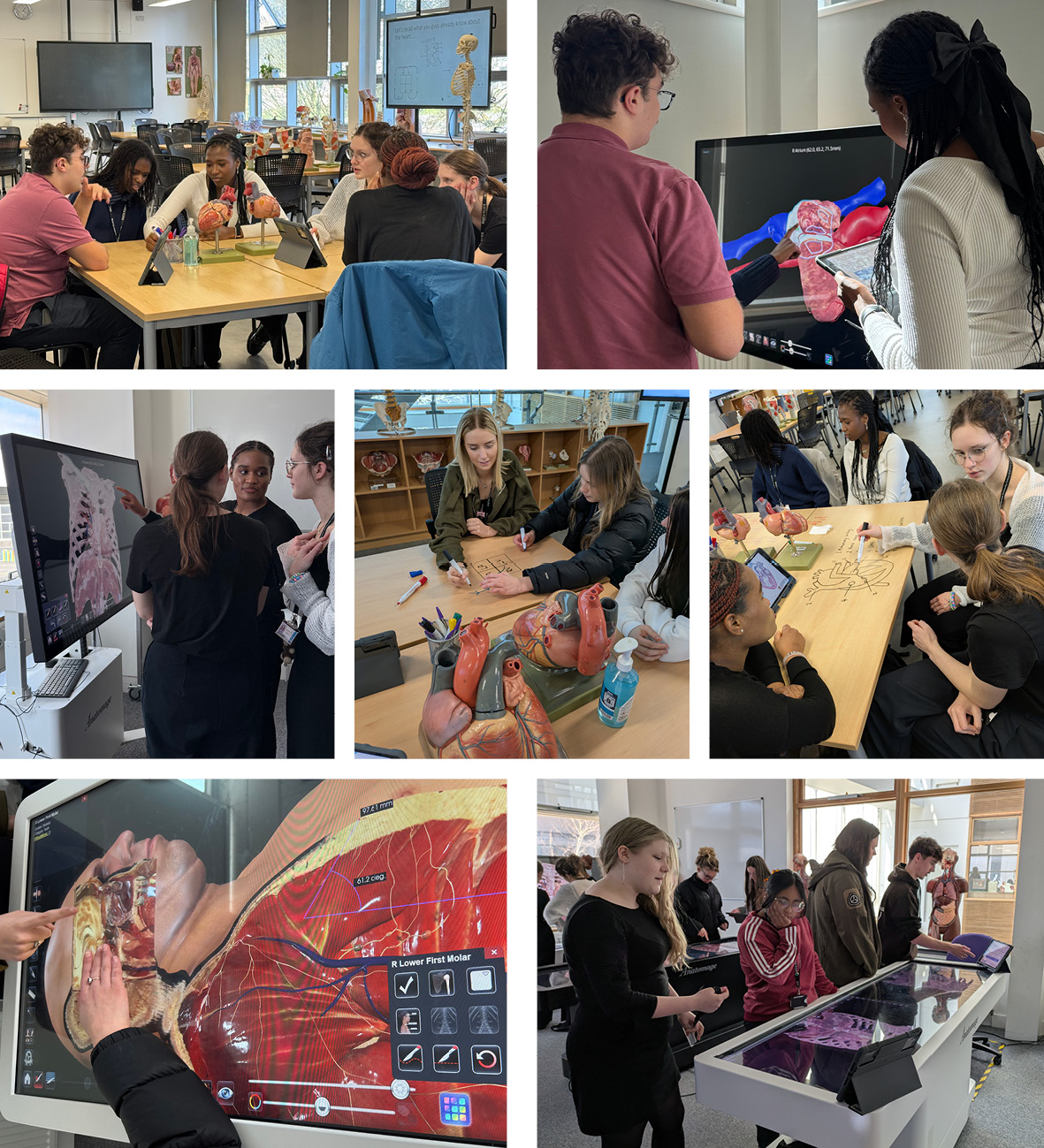
A group of Year 12 BTEC and Year 13 A Level Biology students, recently visited Plymouth University to take part in a specialist cardiac anatomy workshop.
During the session, students had the opportunity to test and develop their understanding of the heart using iPads to manipulate interactive digital images alongside anatomical models. These activities allowed students to explore the structure of the heart in detail and strengthen their knowledge of a key component of their biology courses.
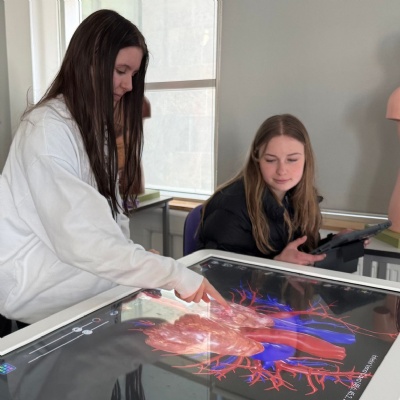
One of the highlights of the day for many students was the opportunity to use Anatomage technology, a tool commonly used by medical students to study anatomy. This advanced system displays highly detailed, interactive images of real human cadavers donated to science. Students were able to virtually “dissect” the body from different angles, identify specific body systems, and examine the pathology of diseases that affected the patients.
Year 12 student Esther said,
“Using the Anatomage table was fascinating because we could see real human anatomy in so much detail. It helped me understand the heart and other organs much better than just looking at diagrams in a textbook.”
The experience enabled students to explore human anatomy in a way that is not possible within the school environment. It sparked thoughtful discussions and helped students improve their ability to identify and understand key anatomical structures.
Year 13 student Ophelia added,
“It was really interesting to see how the different systems in the body connect with each other. The technology made it much easier to visualise how everything works together.”
The university lecturer leading the workshop also commented on how well behaved and engaged our students were throughout the visit. They asked insightful questions and treated the images of donated bodies with the respect they deserved.
Students also learnt more about the courses offered at Plymouth University and the initiatives designed to widen access to medical careers. These programmes aim to reduce barriers that some students face when pursuing a career in medicine, opening the door to a rewarding and impactful profession.
Overall, the visit was an inspiring and valuable experience that gave students a deeper insight into human anatomy and the possibilities of studying medicine in the future.